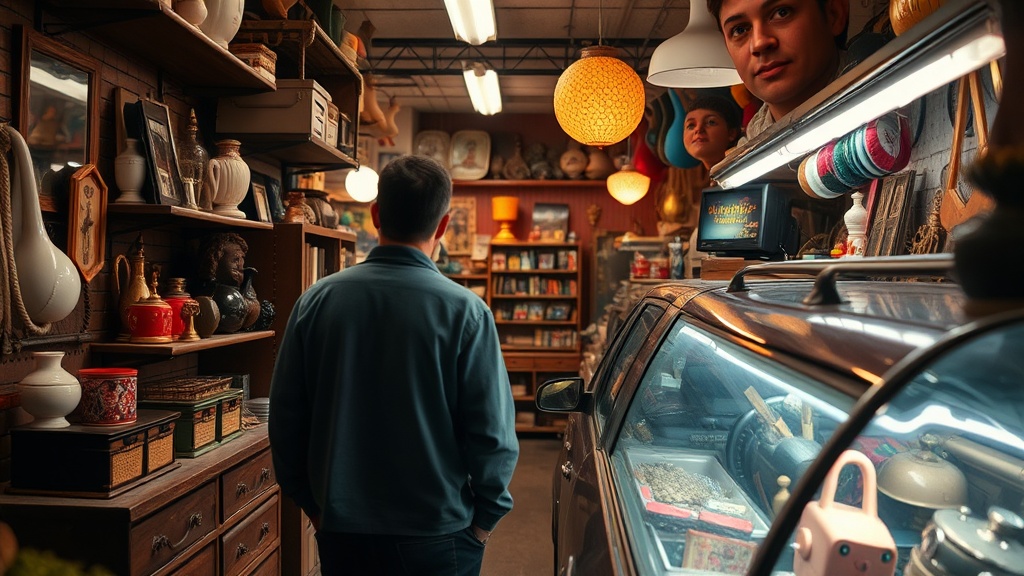
Finding High-Value Oddities in Local Thrift Stores

This guide provides a practical framework for identifying high-value bottle caps, unique glass bottles, and small-scale collectibles while browsing local thrift stores and secondhand shops. You will learn how to spot high-value indicators, what specific details to look for in metal-lined caps, and how to differentiate between common junk and genuine collector-grade oddities.
How Do I Spot High-Value Bottle Caps in Thrift Stores?
High-value bottle caps are usually identified by their rarity, specific manufacturing eras, or unique aesthetic variations that set them apart from mass-produced modern versions. You aren't just looking for any cap; you're looking for the outliers. These are often found in the "miscellaneous" bins or the bottom of junk drawers rather than the organized collectible sections.
Look for heavy metal weight and distinct textures. A cap that feels substantial in your hand often suggests an older, more durable construction. Modern caps are often thin and flimsy, but vintage crown corks—the standard design for many decades—have a specific heft. If you see a cap with a thick, intact liner, it might be a sign of a well-preserved or specialized piece. You can learn more about the history of these designs by tracing the evolution of the crown cork to understand what a "standard" looks like versus a specialty item.
Keep an eye out for these three specific red flags of value:
- Material Integrity: Look for minimal rust or oxidation. A pristine, uncorroded cap is significantly more valuable to a completionist.
- Liner Quality: If the cap has a visible internal liner, check for evenness. High-quality, well-preserved liners can indicate a more premium or specialized production run.
- Graphics Detail: High-value caps often feature intricate, high-fidelity printing. If the design looks "blurry" or low-resolution, it's likely a modern, low-tier reproduction.
Don't ignore the glass. A dusty, unlabeled bottle sitting in a corner might be a common soda bottle, but it could also be a rare piece of apothecary glass or a vintage brewery bottle. Always check the bottom of the glass for embossed markings or manufacturer stamps. These markings are the "fingerprints" of the bottle's origin.
What Makes a Bottle or Cap Rare?
Rarity is driven by limited production runs, specific regional distribution, or the survival rate of the item due to its material composition. A bottle might be rare because it was only produced for a single brewery in a specific town for a three-month period. A cap might be rare because it uses a specific type of liner or a unique metal alloy that was phased out quickly.
The "oddity" factor is also a major driver of value. This refers to items that don't quite fit into a standard category—think unusual shapes, strange colorways, or unconventional materials. For example, a bottle with an asymmetrical neck or a cap with an unusual coating (like a textured or matte finish) can command a higher price among niche collectors.
Check these categories when you are digging through bins:
- Regional Exclusives: Items that were only available in certain geographic areas (e.g., a specific soda brand from the 1950s that only existed in the Pacific Northwest).
- Error Pieces: While rare, these are often hard to spot. A misprinted cap or a bottle with a manufacturing defect can sometimes be a high-value oddity.
- Material Deviations: This includes glass colors that are uncommon, such as cobalt blue or deep amber, or metal caps with non-standard coatings.
It is worth noting that many people overlook these items because they look "broken" or "old." A slightly dented cap might actually be a specific variant. However, be careful. A dented cap is often just a damaged cap. You need to know the difference between a "variant" and "damage."
How Much Is a Vintage Bottle Cap Worth?
The value of a vintage bottle cap ranges from a few dollars for common varieties to hundreds of dollars for extremely rare, museum-quality specimens. Most of what you find in a thrift store will be in the $1 to $10 range, but the "oddities" are where the profit potential lies.
To estimate value, you must compare the item to known benchmarks. Use sites like eBay to see actual "sold" listings rather than "asking" prices. If a seller is asking $50 for a cap, but no one has bought one for $50 in three years, that cap isn't worth $50. It's just a wishful price.
| Item Type | Common Value | High-Value Potential | Key Identifier |
|---|---|---|---|
| Standard Soda Cap | $0.50 - $2.00 | $15 - $30 | Minimal rust/original gloss |
| Brewery Crown Cork | $1.00 - $5.00 | $50 - $100+ | Rare brewery/regional brand |
| Colored Glass Bottle | $2.00 - $10.00 | $40 - $80 | Unique shape or embossed text |
| Specialty/Error Cap | $5.00 - $15.00 | $100+ | Unique liner or printing error |
One thing to remember: value is subjective. A collector specializing in 19th-century glass will value a certain bottle much higher than a generalist. You aren't just looking for "stuff"; you are looking for items that fit a specific collector's checklist. If you're a beginner, try to avoid common mistakes like overpaying for items that are actually just common junk.
When you find something that looks interesting, don't immediately grab it. Look at it from multiple angles. Check the underside of the cap. Check the interior of the bottle for any sediment or residue that might indicate its age. Sometimes, the most valuable part of a collectible is the part you can't see immediately.
If you see a bottle with a heavy, thick glass wall, it's likely an older model. Modern glass is often thinner to save on shipping costs and material. This thickness is a hallmark of older, more durable production methods. If you find a cap with a very distinct, non-standard color variation, don't just assume it's a mistake. It could be a documented rare variation. For instance, if you've already studied rare color variations in breweries, you'll have a better eye for these subtle differences.
Always check the weight. A lightweight, thin-walled bottle is usually a modern, mass-produced item. A heavy, substantial piece of glass or metal is much more likely to be a vintage or specialty item. This weight is often the first clue that you've found something worth a second look.
Steps
- 1
Check the Unconventional Bins
- 2
Look for Texture and Patina
- 3
Verify Weight and Material
- 4
Cross-Reference with Reference Books