Why Do Certain Vintage Bottle Caps Lose Their Color?

Understanding the Fading of Vintage Metal Caps
Have you ever looked at a piece in your collection and wondered why that once-vibrant red or deep cobalt blue now looks like a dull, washed-out pastel? It's a frustrating sight for any collector. This post looks at the chemical and environmental reasons behind pigment degradation in metal bottle caps. We'll examine how light, chemical exposure, and even the printing process itself play a role in how your collection ages over time.
The way color lives on a piece of metal is far more complex than just applying paint. Most vintage caps use a combination of ink, lacquer, and sometimes even baked-on enamel. When these layers react to the world around them, the results can be permanent. Understanding these reactions helps you decide which pieces to display in the open and which to keep tucked away in a dark, controlled environment.
How Does UV Light Affect My Collection?
Light is one of the biggest enemies of a vibrant collection. When we talk about UV light—specifically ultraviolet radiation—we're talking about high-energy waves that can literally break the chemical bonds of pigments. This process, often called photodegradation, is why a cap sitting on a sunny windowsill looks vastly different from an identical one kept in a drawer.
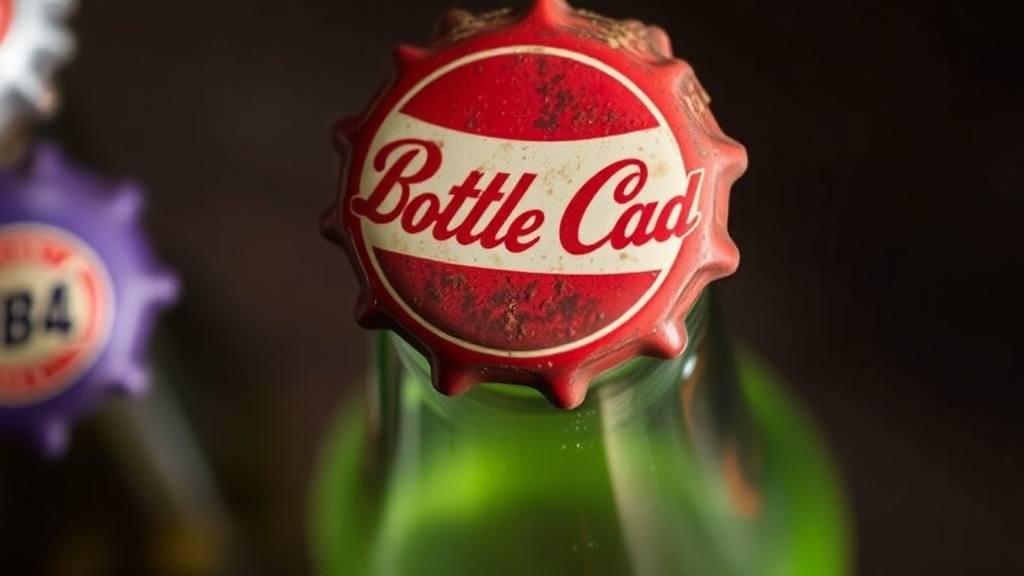
Certain colors are more susceptible to this than others. For example, red pigments are notoriously sensitive to light. If you've noticed your red-themed caps looking pinkish or orange, you're seeing the result of light-induced molecular changes. You can learn more about the science of light and color degradation through resources like the Library of Congress preservation guides, which detail how light impacts various materials.
It isn't just the ink that suffers, either. The clear protective lacquer applied over the graphics can also yellow or crack when exposed to high UV levels. This creates a cloudy appearance that makes the colors underneath look muddy or muted. If you're displaying pieces near a window, you're essentially putting them in a slow-motion oven of light damage.
What Causes Ink Fading on Metal Surfaces?
Beyond the sun, the actual chemistry of the ink matters. In the mid-20th century, many manufacturers used different printing methods, from lithography to silk-screening. Some of these methods utilized pigments that were inherently less stable. If the ink wasn't properly cured or if the chemical composition was low-quality, the color will fade even without direct sunlight exposure.
Oxidation is another sneaky culprit. While we often focus on the metal rusting, the oxidation of the pigment itself is a real phenomenon. When oxygen and moisture interact with the metal surface and the ink, it can cause a chemical reaction that alters the hue. This is especially common in pieces that have been stored in damp environments or even in basement collections where humidity isn't monitored.
- Pigment Type: Organic pigments tend to fade faster than inorganic ones.
- Binder Quality: The substance holding the pigment together can degrade, causing the color to flake or fade.
- Atmospheric Pollutants: Sulfur or other gases in the air can react with the metal and the ink.
For those interested in the chemical stability of various materials, the National Institute of Standards and Technology provides excellent data on how different elements react to environmental stressors.
Common Color Loss Scenarios
To help you identify what's happening to your pieces, I've put together this quick reference guide. It isn't an exact science—every piece is unique—but it's a solid starting point for diagnosing the issue.
| Visual Symptom | Likely Cause | Potential Solution |
|---|---|---|
| Pinkish/Pale Red | UV Light Exposure | Move to a dark area or use UV-filtered glass. |
| Cloudy/Yellowish Surface | Lacquer Degradation | Keep in a low-humidity, temperature-controlled space. |
| Mottled/Uneven Color | Moisture/Oxidation | Ensure the piece is dry and sealed in a display case. |
| Dull/Matte Finish | Chemical Reaction | Avoid contact with cleaning agents or acidic air. |
One thing to keep in mind is that once the color is gone, it's gone. You can't "bring back" the color of a faded cap through cleaning. In fact, trying to "clean" the faded surface often results in further damage by stripping away the remaining pigment or the protective coating. It's much better to prevent the damage from happening in the first place.
Is Humidity a Factor in Color Change?
Humidity is often overlooked, but it's a major player in the longevity of your collection. High humidity levels can lead to microscopic amounts of moisture getting trapped between the metal and the ink. This moisture can act as a catalyst for both oxidation and the breakdown of the pigment. If you see a "bubbling" effect under the ink, that's a sign that moisture is actively attacking the surface from underneath.
When humidity fluctuates wildly, the metal expands and contracts. This constant movement can cause the ink layer to crack or even peel away. Even if the metal itself doesn't rust immediately, the physical stress of the environment is enough to ruin the aesthetic-driven value of a vintage cap. This is why a stable environment is your best friend. A small, airtight display case is a great way to mitigate these risks, but it's not a perfect solution if the air inside the case is already damp.
If you're serious about your collection, I'd suggest investing in a decent hygrometer. It's a cheap way to monitor the humidity in your display area and ensure you're not inadvertently aging your pieces. If you see the humidity spiking, it might be time to move your collection to a more controlled space or use a desiccant pack within your display cases.