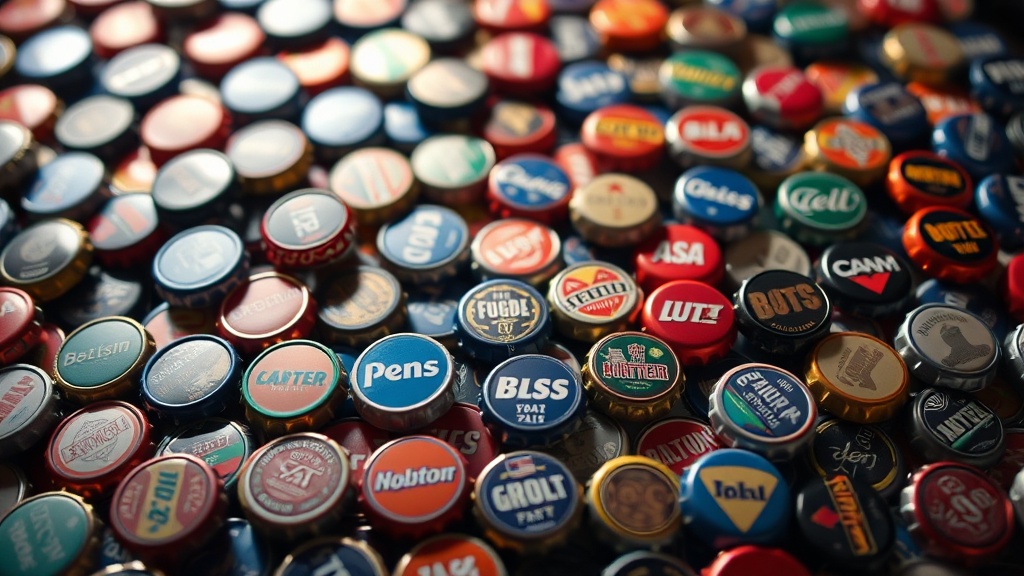
What's the Best Way to Arrange a Bottle Cap Collection for Maximum Impact?

Most collectors assume that keeping bottle caps tucked away in cardboard boxes is the safest bet for preservation. It's not. Stored improperly — even in the dark — caps can corrode, stick together, or lose their finish from trapped humidity. The real trick isn't hiding your collection; it's displaying it smartly.
Your bottle caps tell stories. They're fragments of history — breweries long gone, soda fountains from childhood summers, brands that disappeared decades before you were born. Why keep that locked away? A well-arranged display protects your pieces while letting you actually enjoy them. That's the balance this guide will help you strike.
Why Do Collectors Worry About Displaying Their Bottle Caps?
Fear drives a lot of decisions in this hobby. Nobody wants to be the person who faded a rare 1930s ACL (applied color label) cap because they hung it near a sunny window. The worry is valid — light damage is irreversible. But paranoia leads to poor choices too. Caps stuffed into plastic bags, crammed into humid basements, or stacked loose in drawers often fare worse than those thoughtfully displayed.
The misconception is that "out of sight" equals "out of danger." It doesn't. Air circulation matters. Temperature stability matters. And yes — seeing your collection matters. Part of preserving these pieces is appreciating them. When you display thoughtfully, you're more likely to spot changes early: a developing rust ring, a loose cork liner, discoloration spreading across an enamel finish. Early detection saves caps.
Many collectors inherited their first pieces from grandparents — rusty tins stuffed with caps from the 1940s and 50s. Those caps survived because someone cared enough to keep them dry. But they often arrived with corrosion already setting in from decades of poor storage. Displaying them properly now halts further damage and lets you assess what you've actually got. Sometimes what looked like trash reveals itself as treasure once you can see it clearly.
What Materials Won't Damage Vintage Bottle Caps Over Time?
Not all display materials are collector-friendly. Some actively harm metal caps over years of contact.
Avoid direct contact with:
- Regular cardboard (acidic, causes tarnish)
- PVC plastics (plasticizers corrode metal)
- Unsealed wood (acids and moisture transfer)
- Adhesive tapes or glues (permanent damage, residue)
Safer alternatives exist. Acid-free mat board — the kind museums use for photo framing — makes an excellent backing material. Cotton museum board works too. For encasing individual caps, consider polyethylene or polypropylene sleeves (Mylar D is the gold standard). These inert plastics won't off-gas or stick to metal surfaces.
Wood displays aren't off-limits entirely. Just ensure they're sealed with a water-based polyurethane — not oil-based, which can emit volatile compounds. Felt linings? Only if they're 100% wool or specially labeled acid-free. Standard craft felt contains dyes and chemicals that transfer to metal over time.
For arranging caps within a frame or case, don't use glue. Ever. Instead, consider custom-cut foam inserts that hold caps snugly without adhesive. FoamCore board with precise cutouts works for lightweight arrangements. Serious collectors sometimes commission custom shadow boxes from conservators — expensive, but worthwhile for high-value pieces.
Glass choices matter too. Regular glass is fine for most purposes, but it doesn't block UV. Museum glass or UV-filtering acrylic adds protection at higher cost. For truly valuable caps, the investment pays off. The American Institute for Conservation offers detailed guidance on selecting archival materials for metal objects.
How Do You Arrange Bottle Caps by Color, Brand, or Era?
Organization isn't just aesthetic — it helps you track what you own, identify gaps, and notice condition changes quickly.
Color arrangements catch the eye. Gradient displays (transitioning from golds through reds to blues) create visual flow. But grouping by brand tells a clearer historical story. All your Coca-Cola caps in one section — from early 1900s cork-lined varieties through 1960s spray-painted designs — show evolution in a way scattered pieces never could.
Chronological arrangements work beautifully for regional collections. A timeline of Ottawa Valley breweries, for example, makes the narrative tangible. You see consolidation happening — twenty independent brands shrinking to six, then three, then one absorbed by a national conglomerate. The caps become historical evidence.
Some collectors arrange by cap type: cork-lined, screw-top, twist-off, pry-off. Others sort by condition — pristine display pieces versus "study collection" examples with wear. There's no wrong method. The key is consistency. Document your system. Future you — or whoever inherits your collection — will thank you.
Consider leaving space for growth. If you've got forty different Pepsi caps, arrange thirty-six in a grid and leave four spots empty. This signals where the gaps are — and gives you hunting targets. It's surprisingly motivating to have visual reminders of what you're missing.
Can Direct Light Really Fade Your Collection?
Yes. Unequivocally. And not just sunlight.
Ultraviolet radiation breaks down organic pigments. Those vibrant reds, deep blues, and crisp whites on vintage ACL caps? They're fugitive colors — meaning they run away when light hits them. Coca-Cola red is particularly vulnerable. So are certain yellows and greens. Once faded, the original color never returns. You've created a permanently damaged piece.
But here's what surprises newer collectors: indoor lighting causes fading too. Fluorescent tubes emit UV. So do halogen bulbs. LEDs are safer — though not all are UV-free. Look for "museum-grade" or "archival" LED lighting if you're illuminating a display case.
Distance helps. Light intensity follows the inverse square law — double the distance, quarter the intensity. Keeping caps even six inches farther from a bulb makes a measurable difference. Glass filters matter too. Regular window glass blocks some UVB but lets UVA through. Museum glass or acrylic with UV filtration offers real protection.
Consider rotating your display if you have extensive holdings. Keep the bulk in archival storage, bring out selections for a few months, then swap. This limits cumulative light exposure while keeping your display fresh. It's the same approach major museums use for sensitive works on paper. The Smithsonian Institution provides extensive resources on preventive conservation and light damage that apply directly to bottle cap collections.
Where Should You Avoid Placing Your Display?
Location mistakes destroy more collections than bad materials do.
Kitchens and bathrooms are terrible choices. Humidity fluctuates wildly. Cooking oils deposit sticky films. Temperature swings from hot showers or oven use accelerate corrosion. Even caps under glass suffer — condensation forms inside sealed cases when temperature drops suddenly.
Near heating vents or radiators? Don't. Dry heat cracks cork liners and makes metal brittle. Basements? Only if dehumidified consistently. Summer humidity above 60% RH (relative humidity) triggers rust. Below 30% dries out organic materials like cork and paper labels.
External walls pose risks too. They're colder in winter, creating temperature differentials that cause condensation inside frames. Interior walls are safer. High-traffic areas where people brush against displays? Accidents happen. Choose spots where your collection won't get bumped during daily life.
Attics and garages are collection graveyards. Temperature extremes in unconditioned spaces — from -20°C winters to 40°C summers in some regions — damage everything. Adhesives fail. Metal expands and contracts. Cork crumbles. Just don't.
The sweet spot is a stable interior room with consistent temperature, moderate humidity, good air circulation, and minimal direct light. Think living room wall, not bathroom shelf. Think hallway display case, not kitchen windowsill.
Monitor your display environment. A simple digital hygrometer (humidity meter) costs under twenty dollars and tells you when conditions drift. If you're serious about preservation, the Northeast Document Conservation Center offers excellent free resources on environmental monitoring for small collections.
Building a display collection takes time. Start small — a single frame of your favorite dozen caps, properly mounted and protected. Learn what works in your specific environment. Expand gradually. Document everything. And remember: these caps survived decades before reaching you. With reasonable care, they'll survive decades more. The goal isn't perfection — it's preservation that lets you live with your collection, enjoy it daily, and pass it along intact.