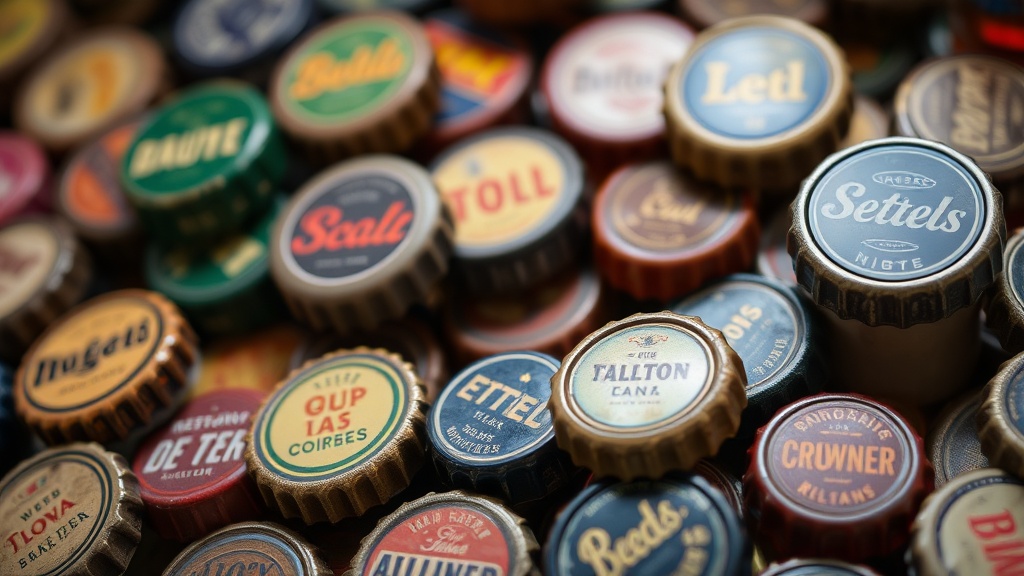
Vintage Bottle Caps: A Collector's Guide to Finding Hidden Gems

What Makes a Bottle Cap "Vintage" and Worth Collecting?
A bottle cap earns its vintage status through age, rarity, and historical significance. Generally, caps manufactured before the 1980s qualify as vintage, though the most sought-after pieces date from the early 1900s through the 1960s. The value isn't just about age—it's about the story behind the brand, the condition of the piece, and how many survived decades of being pried off bottles and discarded.
This guide covers the key areas every collector should understand: identifying valuable pieces, knowing where to hunt for them, understanding condition grading, and building a collection that brings genuine satisfaction. Whether you're starting out or looking to refine an existing collection, these insights come from years of buying, selling, and trading in the bottle cap community.
Where Can You Find Vintage Bottle Caps Worth Adding to Your Collection?
The best vintage bottle caps turn up in unexpected places—estate sales, flea markets, old general stores, and even construction sites where historic buildings once stood. eBay remains the largest online marketplace, though prices there often reflect collector demand rather than true scarcity. Facebook groups dedicated to bottle cap collecting offer better deals and more knowledgeable sellers who understand what they're parting with.
Local sources deserve special attention. Ottawa's ByWard Market has yielded remarkable finds for patient hunters. Antique shops in smaller towns—places where soda bottlers once operated—often have jars of caps sitting unnoticed on back shelves. The key is asking. Many shop owners don't display caps because they assume nobody wants them.
Here's the thing about buying collections: they're usually sold as lots. You'll get common Pepsi and Coke caps mixed with genuine rarities. The trick is spotting the gems quickly. A 1950s ACL (applied color label) cap from a regional bottler might be worth $50 while the Coca-Cola cap beside it fetches $2.
Estate Sales and Auctions
Estate sales represent the gold standard for vintage cap discovery. Complete collections surface when longtime collectors pass on, and families often sell decades of accumulation at prices far below market value. Arrive early, bring cash, and know exactly what you're looking at.
Online auctions through Heritage Auctions occasionally feature notable bottle cap lots, though competition drives prices higher. Provincial auction houses in Canada sometimes overlook cap collections entirely—listing them as "miscellaneous advertising" or "bottle stoppers" in their catalogs. That's where opportunity lives.
How Do You Identify Rare and Valuable Bottle Caps?
Rarity stems from several factors: limited production runs, short-lived bottling companies, commemorative issues, and geographic isolation. A cap from a defunct New Brunswick soft drink company that operated for only three years will outvalue thousands of common Coca-Cola caps. The same principle applies to brewery caps from pre-Prohibition era microbreweries.
Learning to date caps requires studying manufacturing techniques. Cork-lined caps (common through the 1950s) give way to plastic-lined versions in the 1960s. Aluminum replaced steel gradually through the 1970s. These material shifts help place unmarked caps in their proper era.
The catch? Condition matters enormously. A rare cap in poor condition might be worth less than a common cap in mint state. Serious collectors use a grading scale similar to coin collecting:
| Grade | Description | Market Impact |
|---|---|---|
| Mint | Never used, crisp edges, no fading | Premium pricing—100% of book value |
| Near Mint | Minor shelf wear, colors vibrant | 75-90% of mint value |
| Very Good | Light use marks, slight corrosion | 50-75% of value |
| Good | Visible wear, fading, minor dents | 25-50% of value |
| Poor | Heavy damage, significant rust | 10-25% of value |
Worth noting: some collectors specifically seek "dug" caps—pieces recovered from old dump sites and privies. These carry historical weight despite their rough condition. The Galco's Soda Pop Stop in Los Angeles maintains an archive of vintage soda memorabilia that illustrates how regional brands once dominated American markets.
Which Types of Vintage Bottle Caps Command the Highest Prices?
Certain categories consistently outperform the broader market. Pre-1960s ACL (Applied Color Label) soda caps with full graphics bring strong prices because the ceramic paint application created vibrant, durable designs. Early twist-off caps from the 1960s transition period hold niche appeal. Foreign caps—especially from defunct Eastern European and Asian brands unavailable during Cold War era—attract serious international interest.
Canadian collectors specifically prize caps from defunct regional breweries. Brands like O'Keefe, Molson's limited seasonal runs, and Quebec's microbrewery experiments from the 1940s-70s trade actively at shows. The Brewery History Society maintains archives documenting these regional variations.
The ACL Advantage
Applied Color Label technology revolutionized bottle cap design in the 1930s. Before ACL, caps were plain metal with paper labels that deteriorated quickly. The ceramic paint process allowed bottlers to print detailed logos directly on the metal. These caps survived decades better than their predecessors.
Some ACL caps to watch for include:
- Nehi fruit-flavored sodas from the 1940s-50s—their multi-color designs hold up beautifully
- Canada Dry's regional variations, particularly the pre-1960s versions with detailed maps
- Squirt's early mascot designs from the 1940s
- Hires Root Beer caps with the "77" trade dress
- Local Ottawa Valley bottlers like Dow and Cosgrove
Commemorative and Error Caps
Special event caps—World's Fair issues, Olympics tie-ins, centennial celebrations—were produced in limited quantities and often discarded quickly. The 1967 Canadian Centennial caps surface periodically, though finding complete sets with all participating bottlers takes years of dedicated searching.
Manufacturing errors create accidental rarities. Double-struck designs, off-center printing, and color misregistration happened more frequently in mid-20th century production. These weren't quality-controlled out—they simply went onto bottles and into the marketplace. A misprinted 1950s 7-Up cap sold at auction in 2019 for $340. The standard version might fetch $8.
How Should You Store and Display Your Collection?
Proper storage prevents the slow degradation that destroys collections. Caps need stable humidity (40-50%), protection from direct light, and materials that won't react with the metal or any remaining cork. PVC pages—common in photo albums and some trading card sleeves—emit chemicals that damage caps over time. Polypropylene or mylar sleeves are the safe choice.
That said, the "best" storage method depends on your collecting goals. Investors favor individual 2x2 cardboard holders (the same system coin collectors use) that allow examination without handling. Active traders prefer binder pages that display dozens of caps at shows. Casual collectors often use compartmentalized plastic boxes—fishing tackle organizers work surprisingly well.
Never store caps in direct contact with rubber bands, rubber-backed display mats, or foam inserts. These materials break down and bond with metal. Cork-lined caps need particular attention—the cork itself can mold or crumble if humidity fluctuates wildly. Some collectors apply a light mineral oil coating to preserve old cork, though purists debate this practice.
Display Options That Work
Shadow boxes with UV-protective glass showcase featured pieces while protecting them from dust and light. Wall-mounted frames with fabric backing allow rearrangement without new holes. The key principle: displayed caps should be duplicates or common pieces, not irreplaceable rarities. Light damages everything eventually, even under "museum glass."
What Resources Help You Research and Value Bottle Caps?
No comprehensive price guide exists for bottle caps—the market's too fragmented, too dependent on condition, and too subject to regional variation. Serious collectors build their own reference libraries from auction records, dealer catalogs, and club newsletters. The Bottle Cap Museum online database catalogs thousands of varieties with photos and estimated rarity ratings.
Joining a collector organization provides access to experienced members who've handled thousands more caps than any book covers. The Crown Cap Collectors Society holds annual conventions where knowledge flows freely—and where the real trading happens in hotel rooms after the official show closes. Canadian collectors should connect with the Toronto-based Vintage Advertising Club, which welcomes bottle cap enthusiasts alongside broader advertising memorabilia collectors.
Online forums have largely moved to Facebook groups, though the Bottle Cap Collectors Facebook group maintains active daily discussion with members worldwide. Instagram has emerged as an unexpected research tool—searching hashtags like #vintagebottlecaps and #crowncapcollection surfaces collections from around the globe, allowing visual comparison of variations you might never encounter in person.
"The best collectors aren't the ones with the biggest collections. They're the ones who can look at a jar of random caps and spot the one piece that doesn't belong—the foreign import, the error, the regional brand that operated for six months in 1954."
Building a meaningful collection takes patience more than money. The caps you find yourself—digging at an old dump site, sorting through a box at a rural auction, trading with another collector at a show—carry stories that purchased specimens never match. Start with what interests you, whether that's a specific brand, a geographic region, or a time period. Learn everything about that narrow focus before expanding. Depth beats breadth every time.
The bottle cap collecting community remains remarkably welcoming to newcomers. Experienced collectors remember their own early mistakes—the overgraded purchases, the "rare" caps that turned out common, the storage disasters that damaged valuable pieces. Most are happy to share what they've learned. Attend a show. Join the conversations. Handle as many genuine vintage caps as possible. The knowledge accumulates slowly, but it sticks. And eventually, you'll be the one spotting the $50 cap in the $5 jar.