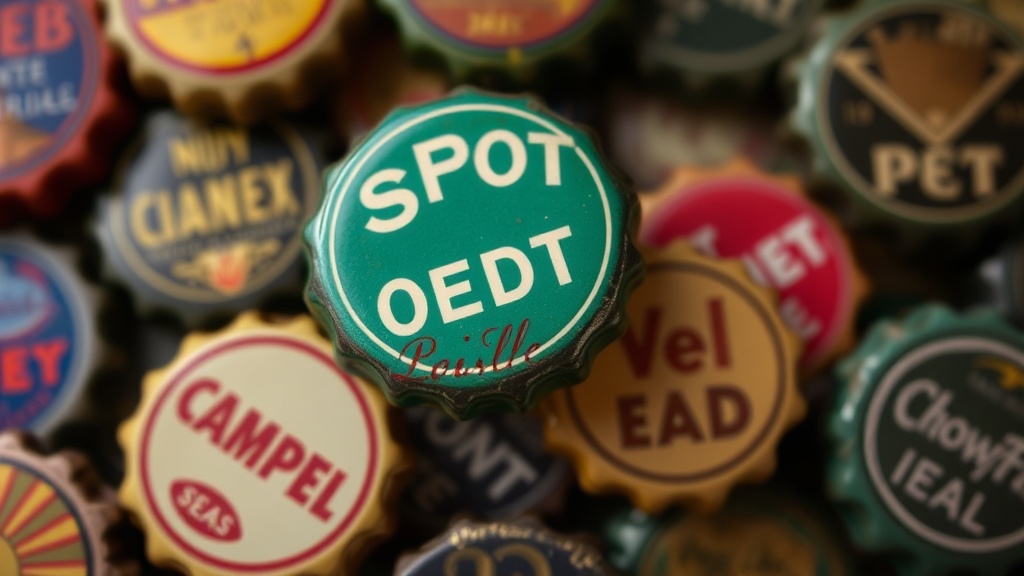
Spot Hidden Gems: How to Identify Rare Vintage Bottle Caps

Quick Tip
Look for cork-lined caps from pre-1960s breweries, as these are often the most valuable due to their limited production and historical significance.
Learning to spot rare vintage bottle caps can transform a casual collection into something special. This guide covers the visual markers, manufacturer details, and condition factors that separate common caps from valuable finds—so you'll know what deserves a closer look at flea markets, estate sales, and online auctions.
What Makes a Bottle Cap Rare and Valuable?
Rarity stems from limited production runs, regional distribution, or short-lived brand partnerships. Early crown caps from the 1890s to 1920s fetch premium prices simply because few survived. The catch? Condition matters enormously—a pristine common cap often beats a damaged rare one.
Look for these scarcity indicators:
- Patent dates embossed on the skirt (pre-1920 examples are highly sought)
- One-way valve designs from early pressurized drink experiments
- Regional breweries that closed before Prohibition or during industry consolidation
- Promotional caps tied to specific events (Olympics, World's Fair, military campaigns)
That said, rarity without demand won't pay the bills. The Bottle Cap Collectors Association tracks trending categories—currently 1950s-60s soda caps and foreign beer exports are hot.
How Can You Tell If a Vintage Bottle Cap Is Authentic?
Authentic vintage caps show consistent aging patterns: dulling of original paint, micro-scratches from actual use, and natural oxidation on the metal underside. Reproductions often look too clean or use modern printing that sits on top of the metal rather than absorbing into it.
Here's what to examine under magnification:
| Feature | Authentic Vintage | Modern Reproduction |
|---|---|---|
| Paint texture | Slightly matte, minor wear at edges | Overly glossy, uniform coverage |
| Metal underside | Natural rust patina or clean aging | Artificially darkened or too shiny |
| Cork liner | Compressed, crumbly, stained | New-looking, uniform thickness |
| Crimps | Irregular from hand-fed machinery | Perfectly uniform machine pressing |
Worth noting: some reputable dealers sell "fantasy caps"—modern reproductions of designs that never existed. These aren't fakes if disclosed, but they won't appreciate like genuine vintage pieces.
Where Should You Look for Rare Bottle Caps?
The best hunting grounds haven't changed much in decades—estate sales in older neighborhoods, abandoned homesteads (with permission), and specialty auctions. Online, eBay remains active for established collectors, though prices often reflect dealer markups.
Here's the thing: your location matters. Ottawa-area collectors (like those connected through bottlecaps.blog) have access to Canadian brewing history that American collectors rarely see—Molson, Labatt, and Sleeman promotional series from the 1960s-70s turn up regularly at Ontario estate sales.
Build relationships with demolition crews, old-bar renovators, and rural property owners. The best finds come from word-of-mouth—someone tearing down a 1940s cabin who remembers you're "the cap person."
Start with a magnifying loupe (the Carson LL-10 works well), a reference guide like Crown Jewels: The Complete Guide to Crown Cap Collecting, and patience. Rare caps hide in ordinary places—your job is recognizing them before someone else does.