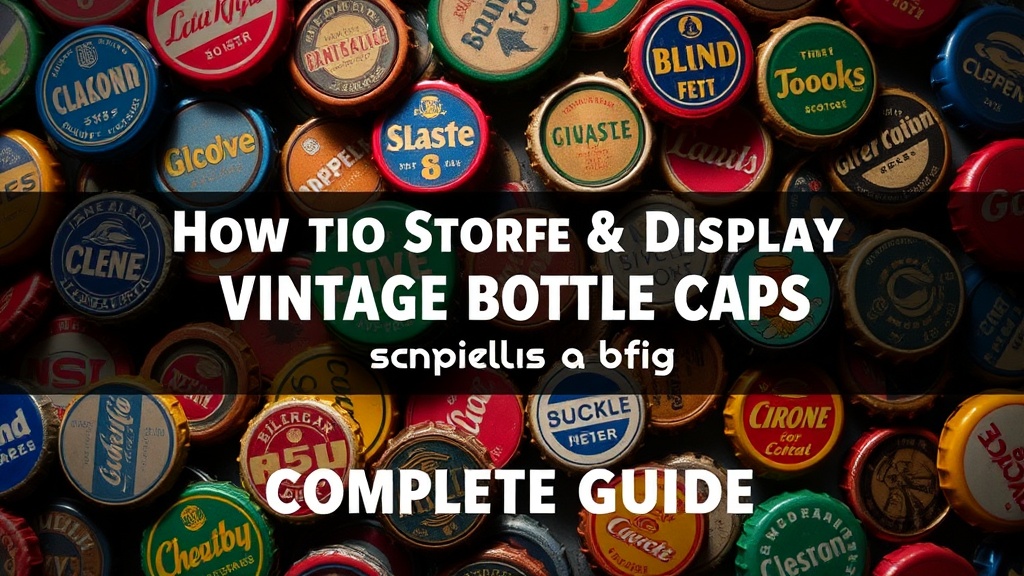
How to Clean, Store & Display Vintage Bottle Caps: Complete Guide

Vintage bottle caps aren't just nostalgia—they're history you can hold. Whether you've inherited a dusty shoebox from a grandparent or spent years hunting down rare Coca-Cola crown caps at flea markets, knowing how to properly clean, store, and display these small treasures makes the difference between a deteriorating pile and a collection worth preserving. This guide covers everything from removing decades of rust to building custom display frames that'll keep caps safe for generations. (No expensive equipment required—just patience and the right techniques.)
What's the Best Way to Clean Vintage Bottle Caps Without Damaging Them?
The safest method depends entirely on the cap's material, age, and condition—there's no one-size-fits-all approach. Cork-lined crowns from the 1950s demand gentler handling than modern all-metal twists. Jump straight into scrubbing with steel wool and you'll destroy lettering, patina, and value in about thirty seconds.
Here's the thing: dirt and grime often protect underlying metal. That black oxidation on a 1930s beer cap? It's actually preventing deeper corrosion. Removing it entirely can expose fresh metal to air and moisture, accelerating decay.
Basic Cleaning for Modern Caps (1960s–Present)
For standard metal crowns without cork, start with warm water and mild dish soap—Dawn Original works well because it cuts grease without harsh additives. Soak caps for 10-15 minutes, then gently agitate with a soft-bristled toothbrush. Rinse thoroughly and dry immediately with a lint-free cloth.
For stubborn residue (think dried soda syrup or beer deposits), create a paste with baking soda and water. Apply with a cotton swab, let sit for five minutes, then rinse. Don't scrub—baking soda is abrasive enough on its own.
Advanced Techniques for Older Caps
Pre-1960s caps with cork liners need special care. Water damages cork. The catch? You can't just dunk these.
Instead, use a dry method first: a soft artist's brush (size 6 or 8 round) to remove loose dirt. For surface rust on the metal skirt, apply Evapo-Rust gel with a cotton swab—it's pH-neutral and won't harm cork. Work in small sections, checking every few minutes. Rinse edges only, keeping water away from the liner.
That said, some collectors prefer leaving caps untouched. Original condition often trumps "clean" in the collector market. A 1940s ACL (Applied Color Label) cap with visible wear can be worth more than an over-cleaned specimen. When in doubt, consult price guides or collector forums before starting.
What to Avoid
- Ultrasonic cleaners—vibration damages paint and loosens liners
- Vinegar or lemon juice—acid etches metal and destroys cork
- Wire brushes—scratches are permanent
- Boiling water—thermal shock cracks enamel finishes
- Commercial silver polish—too aggressive for thin metal
How Should You Store Bottle Caps to Prevent Rust and Deterioration?
Proper storage means controlling humidity, limiting light exposure, and choosing archival-quality materials that won't react with metal over time. Even caps that look perfect today can develop pinhole rust within months if stored wrong.
The enemy is moisture. Metal caps in humid environments (basements, garages, attics) corrode faster. Aim for relative humidity between 35-50%—the same range recommended for preserving photographs and documents.
Storage Container Options
Plastic isn't automatically safe. PVC (polyvinyl chloride)—the stuff in cheap zipper bags and some trading card pages—releases hydrochloric acid as it degrades. That film on old baseball cards? PVC damage. The same happens to bottle caps.
Worth noting: archival polyethylene or polypropylene containers cost more upfront but protect indefinitely. Gaylord Archival and Lineco make museum-grade storage boxes suitable for cap collections.
| Storage Method | Best For | Cost Range | Lifespan |
|---|---|---|---|
| 2x2 cardboard coin flips | Individual display/storage | $10-15 per 100 | 20+ years |
| Polypropylene trading card pages | Organized browsing | $15-25 per 100 pages | Indefinite |
| Archival photo storage boxes | Bulk sorted collections | $20-40 per box | Indefinite |
| Glass jars with gasket lids | Visible storage, casual collecting | $5-15 each | Indefinite (if sealed) |
| Original six-pack carriers | Complete sets, presentation | Variable (vintage) | Requires climate control |
Organizing Your Collection
Chaos kills collections. When you can't find what you own, you buy duplicates—or miss valuable pieces hiding in unsorted boxes.
Most serious collectors organize by category: brewery/brand, country of origin, date, or theme (soda, beer, milk, medicinal). Microsoft Excel or Google Sheets works for basic inventory. Dedicated collectors use Colnect (an online cataloging platform) or specialized software like SoftPro's Bottle Cap Inventory system.
Here's the thing about labeling: pencil only. Ink bleeds, fades, and can transfer. Write catalog numbers on acid-free paper inserts inside storage containers, never directly on caps or their immediate packaging.
Environmental Controls
Silica gel packets absorb excess moisture. Toss a few into each storage container, then replace or recharge them every 6-12 months. (You can recharge silica gel in a 250°F oven for two hours.)
Light—especially UV—fades painted designs. Store caps in dark spaces, or use UV-filtering glass if displaying. Basements work well for darkness but often fail on humidity. A closet on the main living level usually offers the best compromise.
What Are the Best Display Options for a Bottle Cap Collection?
Display choices range from inexpensive DIY projects to professional shadow boxes costing hundreds of dollars. The right option depends on collection size, available space, and whether you want rotating displays or permanent installations.
DIY Display Solutions
Picture frames with shallow depths (1-2 inches) work for flat-mounted collections. Remove the glass—reflections interfere with viewing, and caps don't need protection from dust if they're just decorative pieces. Arrange caps in geometric patterns or spell out words using Hot Glue or E6000 Industrial Adhesive to secure them to backing board.
Magnetic knife strips (the kind sold at IKEA as KUNGSFORS) hold steel caps securely while allowing rearrangement. Mount several horizontally on a wall for an ever-changing gallery. The magnetic approach preserves caps—no adhesive residue, no pressure damage.
For bulk display, chicken wire stapled to a wooden frame creates a rustic grid. Push caps through from behind; the wire grips the crimped edges. This method accommodates hundreds of caps and works well for garage bars, man caves, or commercial spaces.
Professional Display Options
Custom shadow boxes from Michaels or Hobby Lobby include UV-protective acrylic and adjustable shelving. Expect to pay $40-100 depending on size. These suit valuable collections where preservation matters as much as presentation.
Serious collectors often commission Specimen Display Cases from scientific supply companies like Ward's Science. These feature cork or foam backing, glass fronts, and archival construction—originally designed for entomology specimens, they adapt perfectly to bottle caps.
Creative Display Ideas
Some collectors build functional furniture. Coffee tables with glass tops and shallow drawers allow storage and viewing simultaneously. IKEA's LACK table (hacked with a custom inset) appears frequently in collector forums as an affordable base project.
Others integrate caps into household items—bar tops coated in epoxy resin, refrigerator magnets, or even ceiling installations (popular in home breweries). The resin method is permanent, so use only common duplicates, not rare pieces.
Rotation Systems
Large collections can't all display at once. Develop a rotation schedule—seasonal themes, alphabetical progression, or "caps of the month." Stored pieces need inspection during swaps. Check for developing rust, loose liners, or pest damage (silverfish love glue and paper).
How Do You Protect Valuable or Rare Bottle Caps Long-Term?
Insurance and documentation matter more than most collectors expect. A fire, flood, or theft can erase decades of careful acquisition in minutes. Preparation before disaster strikes determines whether recovery is possible.
Photograph every valuable cap individually. Capture front, back, and any damage or unique features. Store digital copies in cloud services (Google Drive, Dropbox) and physical prints in a safe deposit box or fireproof safe.
For truly rare pieces—prototypes, error prints, limited regional releases—consider professional grading. Collectible Bottle Caps of America (CBCA) offers authentication and encapsulation services similar to coin grading. Encapsulated caps receive numeric condition grades and tamper-evident holders. This service costs $15-30 per cap but can increase resale value significantly for high-end specimens.
That said, not every old cap needs grading. Common 1970s soda caps in circulated condition aren't worth the expense. Reserve professional services for pieces you'd insure or sell individually for over $50.
Finally, connect with other collectors. The Bottle Cap Collectors Association provides resources, trading networks, and annual conventions. Their forums offer crowd-sourced authentication when you're unsure about a questionable piece. Local clubs—often found through Meetup or Facebook groups—provide hands-on learning and trading opportunities without shipping risks.
Your collection tells a story: about advertising history, local breweries long closed, design trends across decades. Protecting that story requires more than tossing caps in a drawer. With proper cleaning, thoughtful storage, and creative display, these small metal discs survive as touchable artifacts—conversation starters, memory triggers, and tangible connections to the past.