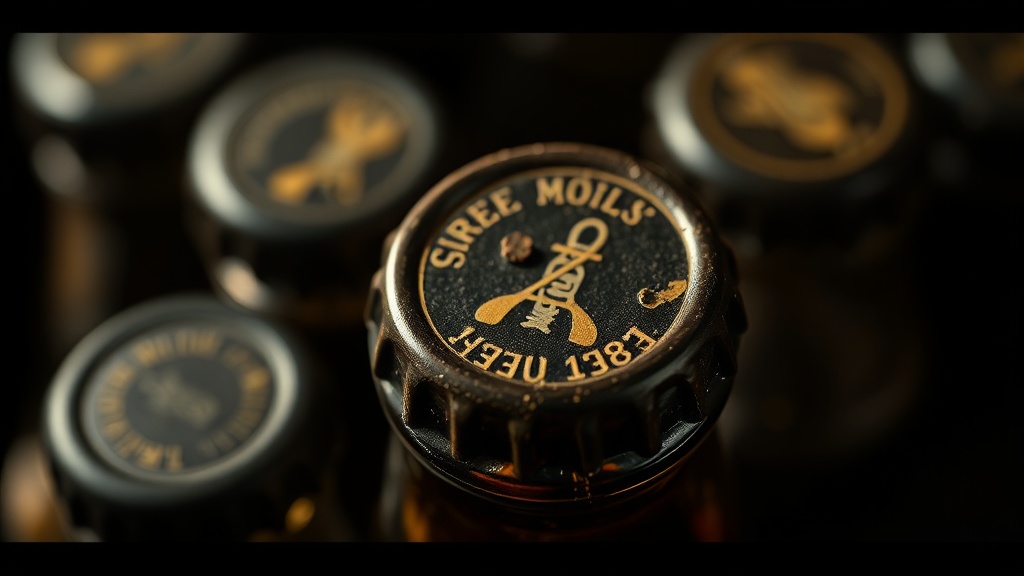
Before the Plastic Seal: Identifying the Era of Cork-Lined Bottle Caps

What you will find in this guide
You'll learn how to distinguish between the various types of natural and composition cork liners used in early 20th-century bottle caps—and why these organic materials eventually failed the test of time. Understanding these internal components is often the only way to accurately date a find when the external lithography has faded or rusted away. We'll look at the specific materials used between 1892 and the late 1960s, providing a timeline that any serious collector needs to have in their back pocket when scouting at flea markets or estate sales.
When William Painter patented the crown cork in 1892, he didn't just invent a piece of metal; he created a sealing system that relied entirely on a thin disc of natural cork. For the first two decades of production, these discs were punched directly from the bark of the cork oak tree. If you flip over a cap and see a solid, single-piece disc with a tight, wood-like grain, you're likely holding a pre-1915 rarity. These natural cork liners were expensive to produce because they required high-quality bark with very few pores. If the cork was too porous, the carbonation would escape, and the beer or soda would go flat before it ever hit the shelf. This cost eventually drove manufacturers to look for a cheaper, more consistent alternative.
What kind of cork was used in early bottle caps?
By the mid-1910s, the industry shifted toward composition cork. Instead of using solid slabs of bark, factories began grinding up scrap cork and mixing it with binders like gelatin, glycerin, or resin. This mixture was pressed into large blocks and then sliced into the thin discs we see in most vintage caps today. You can spot composition cork by its pebbled, multi-colored appearance—it looks a bit like a miniature version of a bulletin board. This was a massive win for breweries because it was significantly cheaper, but it introduced a new problem: the binders could sometimes affect the flavor of the drink. To combat this, companies started adding 'spots' to the center of the cork. These spots were small circles of tin foil, aluminum foil, or even special paper that acted as a barrier between the beverage and the cork.
The era of the 'spot' cap is a favorite for many collectors in the Ottawa region and beyond. If you find a cap with a small silver circle in the middle of the cork, you're looking at a piece of history from roughly 1920 to 1950. The material of the spot itself tells a story. Tin was common early on, but during World War II, metal shortages forced many bottlers to switch to specialized paper spots or gold-tinted aluminum. Some brands, like Coca-Cola, even used a distinctively patterned paper spot that is highly sought after today. These spots didn't just protect the flavor; they often preserved the metal of the cap itself by preventing moisture from reaching the underside of the steel shell. You'll often find that spot caps have less internal rust than their plain-cork counterparts from the same era.
Why did breweries stop using cork liners in caps?
The decline of the cork liner wasn't just about cost; it was about consistency and hygiene. Cork is a natural product, and that means it's susceptible to mold and bacterial growth. If a batch of cork wasn't sterilized properly, it could lead to 'cork taint,' ruining thousands of bottles of product. Also, as high-speed bottling lines became faster, the physical limitations of cork became a bottleneck. Cork discs could sometimes crumble or fail to seat properly under the high pressure of modern machinery. By the 1960s, the chemical industry had developed synthetic polymers that could be molded directly into the cap. These plastic liners—often referred to as 'plastisol'—offered a perfect seal every single time without the risk of organic contamination. By the early 1970s, cork had almost entirely vanished from the crown cap market.
For a deep dive into the technical specifications of these early closures, the Society for Historical Archaeology maintains an exhaustive database of bottle seals that every collector should bookmark. Their research shows that the transition wasn't immediate; many smaller regional bottlers continued using cork well into the 1960s because they didn't want to invest in the new machinery required for plastic liners. This is why you'll sometimes find cork-lined caps for obscure local soda brands that seem much newer than their national competitors. It's also worth noting that the thickness of the cork changed over time. Early natural corks were often 1/8th of an inch thick, while later composition corks were shaved down to half that thickness to save on material costs.
How do you identify the age of a cap by its liner?
Dating a cap by its liner requires a bit of detective work. If the liner is solid natural cork, you're looking at 1892 to roughly 1915. If it's composition cork without a spot, it's likely 1915 to 1930. If it has a metal or paper spot, you're in the golden age of 1930 to 1955. Once you see the cork disappearing in favor of a gray or white plastic ring, you've moved into the 1960s and beyond. There's also a rare middle ground where a very thin layer of composition cork was coated with a full-face plastic film—a short-lived experiment in the late 1950s that tried to bridge the gap between the two technologies. These are often called 'film-seal' caps and are quite rare because the plastic tended to peel away from the cork over time. You can learn more about these specific variations at the Antique Bottles & Glass Collector archives.
Maintaining these pieces in a collection is its own set of challenges. Unlike metal, cork is hygroscopic, meaning it absorbs moisture from the air. If you store your caps in an environment that's too dry, the cork will shrink and eventually turn to dust (a phenomenon we call 'cork rot'). If it's too humid, you'll get mold. I've seen some of the best collections in the country ruined because they were stored in a damp basement where the cork liners became a breeding ground for fungus. The best approach is a stable, climate-controlled room with about 40-50% humidity. Some collectors use a tiny drop of archival-grade glycerin to keep old cork liners supple, but you have to be careful—too much will attract dust and actually accelerate the degradation. Stick to proper storage containers and avoid direct sunlight, which can bleach the cork and make it brittle.
One final thing to check is the serration count on the edge of the cap. While the standard became 21 teeth early on, some very early cork-lined caps might have 24 or even more serrations. These 'many-tooth' caps are almost always pre-1900 and are highly prized. When you find one, the cork is usually in rough shape, but that's part of the character. It's an honest piece of industrial history that survived over a century. Pay attention to the way the cork is glued, too. Early manufacturers used a simple hide glue that often turns dark brown or black over time, while later composition corks used clear synthetic resins. These tiny details are what separate a casual hobbyist from a true student of the craft. Keep your eyes peeled for those spots—they're the silver lining of the bottle cap world.